User Experience
Research & Design
Project Overview
Title: Energy Usage at Home
Type: UXD Research Project
Context: Master’s in Design Innovation,
Team Project
Grade: 1:1
Key Objectives
Understand user behavior and requirements for managing household energy.
Explore solutions like smart technologies, sustainable energy sources, and home-generated electricity to reduce reliance on traditional energy.
Methodology
Secondary Research:
Conducted a literature review to analyze domestic energy trends and define key focus areas.
Primary Research:
Semi-structured interviews and culture probes informed emotional goal models.
Comparative surveys evaluated proposed concepts against existing options.
Outcome:
Developed a user-centered concept addressing functional, emotional, and quality requirements for energy efficiency at home.
The project demonstrated the potential for innovative solutions to reduce costs and environmental impact while improving energy awareness.
Energy Usage at home
This project addressed the critical issue of household energy consumption, focusing on how users manage energy usage and costs. With residential homes accounting for 26% of Ireland’s energy use, our research aimed to empower users with actionable insights to reduce energy waste, save money, and minimize environmental impact.
The project began with a literature review to frame the problem:
How do people feel about, and when, they are interacting with their home energy systems?
—and progressed through emotional goal modeling, ideation, and validation of the final concept through user feedback and statistical analysis.
Role
Project Overview
Title: A Look at the Everyday Use of Prams Using Design Ethnography
Type: Design Ethnography
Context: Master’s in Design Innovation,
Team Project
Grade: 1:1
Methodology
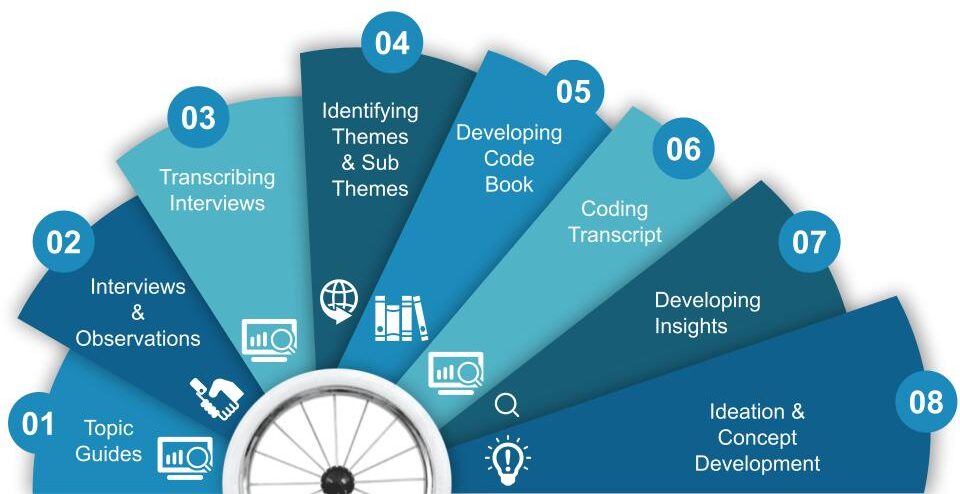
Using ethnographic research techniques, The Strollers Design Ethnography team stepped into the lives of pram users to ‘understand the everyday’ of pram/buggy use. Following on from our research, the team extracted data and translated into actionable insights leading to the delivery of innovative concepts.
Techniques employed involved observation, composition of topic guides specific to particular groups, and use of interviews. These Interviews were reviewed, transcribed and analysed.
Adoption of thematic coding and data analysis enabled the team to interpret the results, garnering key insights through use of personas, journey maps, empathy mapping and focus on key questions leading to “How Might We” statements. The team developed concepts based on these insights. This report provides a step-by-step description of how the final design concepts were developed.
Role
Design Ethnography
A Look at the Everyday Use of Prams Using Design Ethnography